Building your brand to build your sales
The direct connection between f(r)ame and fortune
 The man who broke the news was chubby, red-faced and very short-sighted. And therein lay the first clue. Not so much wearing his heart on his sleeve as wearing his wares on the bridge of his nose.
An optician, then.
And he was breaking the news that sooner or later, we all need reading glasses.
And for me, that moment was sooner. In fact, right now.
He squiggled some numbers on a prescription, gave me a clammy handshake and sent me downstairs to the shop floor, where I was faced with a startling array of eyewear.
There was no shortage of shapes, sizes, designs and prices. Luckily, there was a smiling saleswoman to guide me through the optical maze.
But let’s change the focus for a second.
The man who broke the news was chubby, red-faced and very short-sighted. And therein lay the first clue. Not so much wearing his heart on his sleeve as wearing his wares on the bridge of his nose.
An optician, then.
And he was breaking the news that sooner or later, we all need reading glasses.
And for me, that moment was sooner. In fact, right now.
He squiggled some numbers on a prescription, gave me a clammy handshake and sent me downstairs to the shop floor, where I was faced with a startling array of eyewear.
There was no shortage of shapes, sizes, designs and prices. Luckily, there was a smiling saleswoman to guide me through the optical maze.
But let’s change the focus for a second.
Brand wars
There’s a big debate about the value of brand building – and often, I’ve been caught in the middle. When I talk to sales people, they tell me their marketing counterparts just don’t get it. We need more sales materials, they say. Forget that touchy-feely, big-picture, blue-sky nonsense. We need datasheets and whitepapers, TCO studies and ROI calculators. They’re not wrong. All of those things help oil the wheels of the sales process. But wait a minute, the marketing folks say. If we didn’t create the image, build the brand and raise our profile, they wouldn’t have the sales slots. They’d be selling in a vacuum to people who weren’t as receptive. We’re the ones who oil the wheels. They just turn the handle. As you can imagine, the middle isn’t a very good place to be. But actually, they’re both right. Marketing tells the story, creates the promise and prepares the way. Sales deploys the ground troops and finishes the job. And the truth of the matter is that the terrible twins need each other. Because on their own, they’re not nearly as effective. And brand building is an essential part of this. Because it’s not just touchy-feely, big-picture, blue-sky stuff. It’s also directly related to price. Which brings us nicely back to my specs.View to a thrill
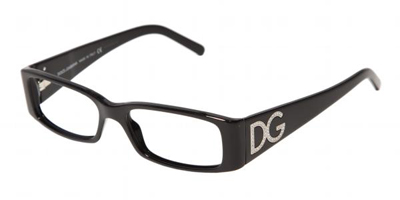
“So what were you thinking of?” said the saleswoman, with an oleaginous smile and an expansive wave towards the endless selection. “D&G? Armani? Guess?” Guess again. If, like me, you’re more Primark than Prada, then you’re not really swayed by brands. Yes, a terrible admission for a marketing professional, but then the counter-argument is that it gives me a cold, level-headed objectivity and much-needed detachment. At least, that’s what I tell myself. In any case, I know, thanks to the geeky Alex Riley on BBC Three, that virtually all fashion glasses are made in one big factory in Italy. Same staff, same production line, same basic components. All that differs is the brand badge. And the price, of course. The ones in the opticians ranged from £25 for basic, unbranded, wire-framed glasses to an eye-watering £350 for some of the higher-end ones. The difference? In a word, brand. It’s the difference between selling one pair at £350, or fourteen pairs at £25 to make the same revenue. So it’s not just touchy-feely, intangible, unmeasurable stuff. It’s also a big boost to your bottom line. Build your brand and you build your sales. Tell the story, create the myth, drive the desire. Then make the sale.Making a spectacle
So which pair did I go for? Do you really have to ask? After my voucher-discounted £5 eye test, I was hardly going to blow a fortune on reading glasses – and £350 is a lot of books. “I’ll go for the no-name brand,” I said nonchalantly to the saleswoman. She smiled a tight professional smile and rolled her eyes ever so slightly heavenwards. At least I think she did. I couldn’t actually see that clearly. Just as well, really. Find out more:- The secret’s out. Alex lifts the lid on technology, food and fashion in BBC Three’s Secrets of the Superbrands.
Categories
- Advertising (9)
- Art (1)
- Blogging (5)
- Blogs (3)
- Books (3)
- Branding (12)
- Communication (92)
- Content (1)
- Content marketing (1)
- Copycam (12)
- Copywriting (120)
- Creativity (8)
- Customer service (18)
- Design (2)
- Education (2)
- Grammar (10)
- Ideas (144)
- Internet (5)
- Language (24)
- Marketing (234)
- Music (1)
- Newsletters (2)
- Philosophy (3)
- Politics (8)
- Pricing (8)
- Productivity (15)
- Psychology (9)
- Punctuation (4)
- Sales (2)
- Sales letters (2)
- SEO (2)
- Service (7)
- Social media (5)
- Social networking (1)
- Technology (13)
- TED (30)
- Typography (1)
- Web design (2)
- Writing (40)