Clichés in marketing? Yes please.
Don’t avoid them like the plague – instead, ride the wave of recognition.
 Do you want to be different? Yes, of course you do. We all crave novelty and want to stand out from the crowd.
Trouble is, your clients/readers/prospects often think in clichés. And so do you. In fact, we all do.
Arab Spring? Good. Democracy? Good. Microsoft? Bad. Apple? Good. Capitalism? Bad, rapacious, greedy. Steve Jobs? Latter-day saint.
A ship sinks? It’s a tragedy. Earthquake? Tragedy. Economic collapse? Tragedy, and if it happens in Athens, it’s a Greek tragedy.
All of these neatly-packaged ideas save us time. We don’t really analyse the facts, but instead fall back on preconceived ideas.
And stories.
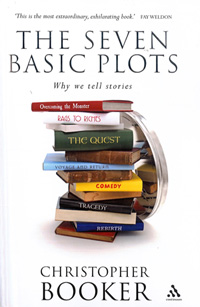
It’s been said that there are only seven story lines (Overcoming the Monster, Rags to Riches, The Quest, Voyage and Return, Rebirth, Comedy, and Tragedy) on which all novels are based.
And yet we never tire of reading them.
There are endless variations on the themes, of course, which adds interest and keeps us turning the pages. But deep down we know that the boy will get the girl, the search will end in success, and the poor little orphan will discover a long-lost relative who makes them rich beyond their wildest dreams.
In other words, we broadly know what to expect. A big part of this expectation is set by the publishers, in their potted blurbs on the back of the book.
I get it, we say to ourselves, it’s one of those books.
And we buy it.
Do you want to be different? Yes, of course you do. We all crave novelty and want to stand out from the crowd.
Trouble is, your clients/readers/prospects often think in clichés. And so do you. In fact, we all do.
Arab Spring? Good. Democracy? Good. Microsoft? Bad. Apple? Good. Capitalism? Bad, rapacious, greedy. Steve Jobs? Latter-day saint.
A ship sinks? It’s a tragedy. Earthquake? Tragedy. Economic collapse? Tragedy, and if it happens in Athens, it’s a Greek tragedy.
All of these neatly-packaged ideas save us time. We don’t really analyse the facts, but instead fall back on preconceived ideas.
And stories.
It’s been said that there are only seven story lines (Overcoming the Monster, Rags to Riches, The Quest, Voyage and Return, Rebirth, Comedy, and Tragedy) on which all novels are based.
And yet we never tire of reading them.
There are endless variations on the themes, of course, which adds interest and keeps us turning the pages. But deep down we know that the boy will get the girl, the search will end in success, and the poor little orphan will discover a long-lost relative who makes them rich beyond their wildest dreams.
In other words, we broadly know what to expect. A big part of this expectation is set by the publishers, in their potted blurbs on the back of the book.
I get it, we say to ourselves, it’s one of those books.
And we buy it.
Tell me a (marketing) story
If you’ve come up with a great new idea, one that’s truly new, then you have a job on your hands. As it’s new, nobody knows what it is, how it works, or how it fits in with what they’ve currently got. So you have a lot of explaining to do. If, on the other hand, you draw a comparison (“it’s a bit like X, only…”) then people can latch on to something, and relate it to their experience. And it’s not just ideas. It also applies to you, your company, your service and your approach to business. As an example, which of these are you:- The staid, solid reliable company that nobody ever got fired for hiring – boring but predictable?
- The funky, left-of-field, creative company that consistently comes up with crazy ideas that pay off?
- The long-term partner that’s aiming for a business relationship where both parties win?
- The cheap, value-for-money, no-nonsense company that sells on price above all else?
- The reassuringly expensive organisation that knows what it’s worth and will never budge on price?
- The professional company that uses formal language, knowing that it’s what your target audience expects?
- The informal, slangy, friendly company that wants to be everybody’s friend?
- The joker, who puts people at ease, but can grate a little in the long term?
Making a virtue of a necessity
These prepackaged ideas may be lazy assumptions. They may be clichés. They may be inaccurate, or even wrong. But they exist. And you can and should harness their power – because just like brands, they have immediate recognition. So don’t leave it to chance, and let other people decide which profile you fit. Decide on a strategy, pick a corporate personality, and run with it. And don’t send out mixed signals (the fun company that has a sense of humour failure, the serious company that tries to get on down with the kids, the creative company that turns all blue-suitish). Be consistent, be predictable, and do your thing the same way every time. You’ll win new clients, who click with your approach, and keep current ones happy because they know what to expect. Think all clichés are bad? Sounds a bit like clichéd thinking to me. Because they can also be a powerful weapon in your marketing armoury. Use them wisely, and you’ll hit the target fast and accurately. Find out more:- Magic number. Christopher Booker The Seven Basic Plots: Why We Tell Stories at Amazon.co.uk.
- Great Expectations. Rory Sutherland (vice-chairman of Ogilvy Group UK) on narrative bias at The Spectator.
Categories
- Advertising (9)
- Art (1)
- Blogging (5)
- Blogs (3)
- Books (3)
- Branding (12)
- Communication (92)
- Content (1)
- Content marketing (1)
- Copycam (12)
- Copywriting (120)
- Creativity (8)
- Customer service (18)
- Design (2)
- Education (2)
- Grammar (10)
- Ideas (144)
- Internet (5)
- Language (24)
- Marketing (234)
- Music (1)
- Newsletters (2)
- Philosophy (3)
- Politics (8)
- Pricing (8)
- Productivity (15)
- Psychology (9)
- Punctuation (4)
- Sales (2)
- Sales letters (2)
- SEO (2)
- Service (7)
- Social media (5)
- Social networking (1)
- Technology (13)
- TED (30)
- Typography (1)
- Web design (2)
- Writing (40)