Are you underselling yourself?
The fine art of getting the price right
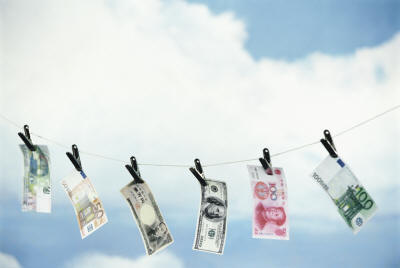
Art or science?
Getting the price right is never easy. And there’s simple reason: there’s no right price. The price is what somebody is willing to pay, not what you’re willing to charge. And it’s about perceived value, not real value (after all, there is no real value – just the cost). Like Japanese food? You should try Masa when you’re next in New York. Just make sure you’ve got deep pockets. The least expensive glass of wine is $16. The most expensive bottle of wine is $3,200. And guess how much an Omasake dinner for two will cost? A gobsmacking $800 (no, that’s not a typo). Naturally, it’s a huge success. It’s only got 26 places – and a three-week waiting list.Think of a number and double it
Many years ago, my aunt was contacted by a glossy magazine through a friend of a friend. Each month, the magazine featured a sumptuous interior, and needed soft furnishings to set off the luxurious properties. And that’s where my aunt came in. For she was in the soft furnishings business. Well not business, exactly. She made them for friends and relatives – cushions, throws, bedspreads, curtains. You name it, she could run it up on her trusty Singer. They asked her for a quote. She panicked, made a cup of tea, and then called up a friend who had lots of business experience. “Think of a number,” said her friend. She did, and wrote it down on a pink envelope. “Now double it.” She did. “Now add on a bit more.” “How much?” said my aunt. “As much as you like,” said her friend nonchalantly. And so, she came up with a figure. With horror, she picked up the envelope and showed the astronomical number to her friend. “That’ll do nicely,” said the friend. And it did. My aunt submitted the quote, and was immediately offered a contract for a year. 12 months later, she doubled her price. And they signed her up again. The lesson is simple. It’s not about price. It’s about value. Find out more:- Next time you’re feeling peckish in New York, why not head on down to the Time Warner Center and splash out on that $800 dinner at Masa? www.masanyc.com
Categories
- Advertising (9)
- Art (1)
- Blogging (5)
- Blogs (3)
- Books (3)
- Branding (12)
- Communication (92)
- Content (1)
- Content marketing (1)
- Copycam (12)
- Copywriting (120)
- Creativity (8)
- Customer service (18)
- Design (2)
- Education (2)
- Grammar (10)
- Ideas (144)
- Internet (5)
- Language (24)
- Marketing (234)
- Music (1)
- Newsletters (2)
- Philosophy (3)
- Politics (8)
- Pricing (8)
- Productivity (15)
- Psychology (9)
- Punctuation (4)
- Sales (2)
- Sales letters (2)
- SEO (2)
- Service (7)
- Social media (5)
- Social networking (1)
- Technology (13)
- TED (30)
- Typography (1)
- Web design (2)
- Writing (40)